

📉 Prediction Markets Explained: How people get rich from war + 🎣 the 400k/month fishing game + 🖼️ Ant & Dec's Banksy

Good afternoon and welcome back to The 99: the home of financial news you can actually use.
If you haven’t already, last week’s newsletter is still relevant and worth a read if you’re worried about what’s happening in the Middle East. There’s also more on that, below.
📖 Iran war: a calm guide to what it means for you
Here's what we're covering this week:
👍 A Good Week For... PlayStation owners
👎 A Bad Week For... Ant and Dec's Banksy collection
🔥 Fiscal Gossip: Roblox is making teen millionaires
💷 Iran war: an update on what it means for you + Reeves's cost of living surprise
🎰 People are making money betting on war. Should they be?
If you’re enjoying The 99, the best thing you can do is share it with one person who’d find it useful. It takes two seconds and it helps us grow. Thank you!
💌 An invitation to join a new series
You’re invited to join a new series called Open Accounts. This has been much requested by the community. Like Financial Confessions, it’s completely anonymous and the goal is to create a space for radical financial transparency. Community members share the details of their financial life and how they spend their money each month, including a 7-day spending diary. It’s similar to the Refinery29 Money Diary series, which sadly is no longer running in the UK.
Time required
Most of the form takes about 10–15 minutes. It should be a positive process and help with your own financial planning - it’s also a nice way to organise your finances in a step-by-step process by encouraging you to look at where your money is going. You’ll also receive a financial planning tool as a thank you for taking part.
The 7-day diary only takes a couple of minutes a day and you can start today.
Financial Confessions
‘Not marrying him was the best £10k I ever spent’

The Stories

👍 A Good Week For... PlayStation owners
The 99 TL;DR: A £2 billion lawsuit against Sony went to trial last week. If it succeeds, up to 12 million UK PlayStation users could be owed around £162 each for years of alleged overcharging on the PlayStation Store.
The case, led by consumer champion Alex Neill, says Sony charged a 30% commission on every digital purchase. If you bought a game or in-game content on PlayStation between August 2016 and February 2026, you’re automatically included.
Sources:
PlayStation You Owe Us, The Sony PlayStation Claim
Consumer Voice, 12 million UK gamers now covered by £2 billion PlayStation legal claim
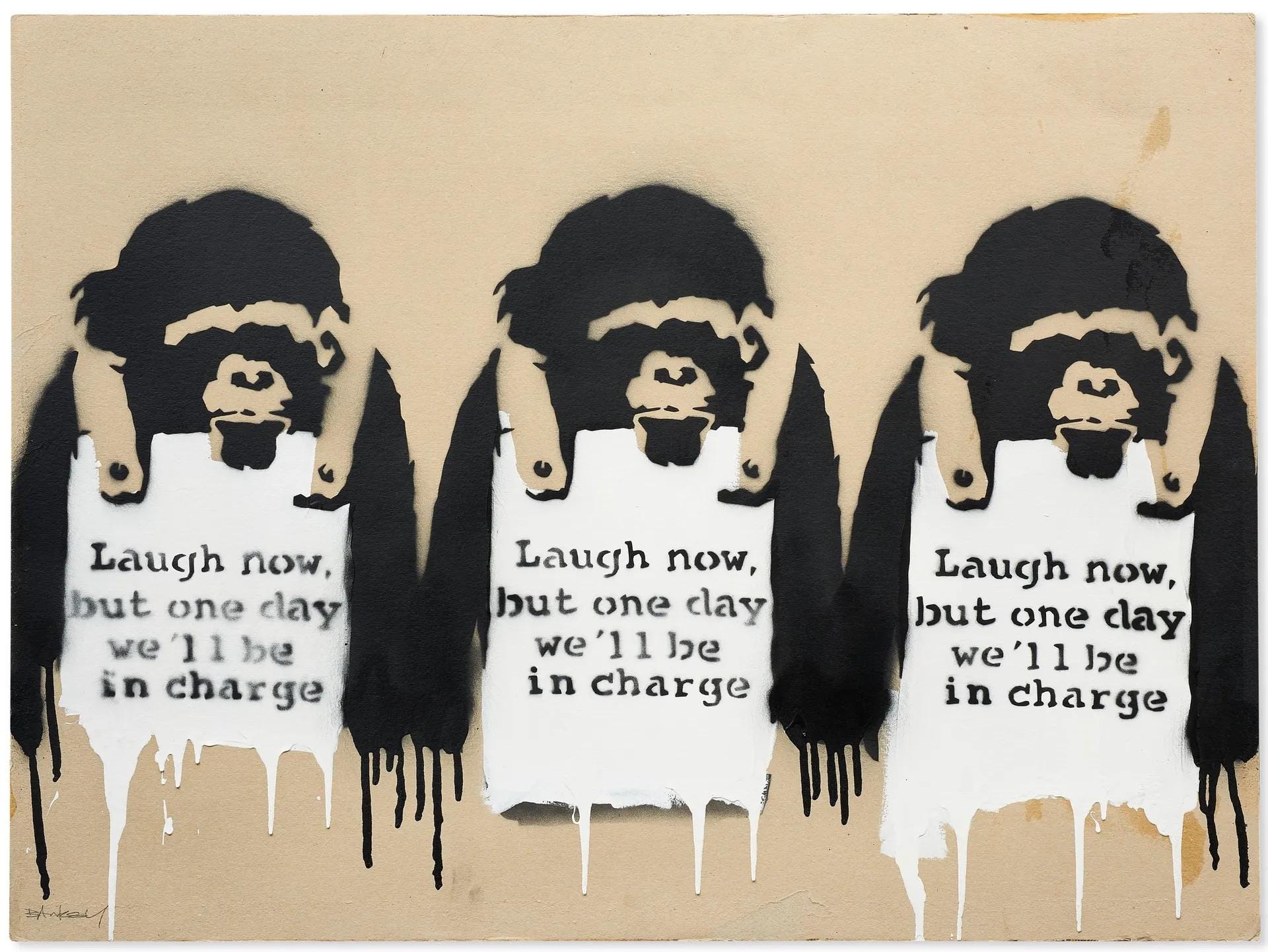
👎 A Bad Week For... Ant and Dec’s art collection
The 99 TL;DR: Ant and Dec care a lot about art it turns out and have won a High Court order to trace £250,000 they say went missing from their Banksy art deals. A judge agreed there’s an “arguable case” that a consultant made secret profits buying and selling artworks on their behalf.
The pair paid £550,000 for six Banksy prints through an intermediary, but the dealer says he only received £300,000. A court order will now force disclosure of where the rest went. They’ve raised similar concerns about a separate sale of 22 items.
Sources:
BBC News, Ant and Dec win court order to trace ‘secret profits’ from Banksy deals
🔥 Fiscal Gossip 🔥

We love niche and obscure businesses and here’s a good one…Meet Nate Colley, a 19-year-old from Nova Scotia who built a fishing game on Roblox called Fisch. It’s a fishing game that features 400,000+ fish variations, rod upgrades, and exploration across multiple islands. All digital of course. He is now making $400,000 a month from it including royalty deals with Lego and Walmart, who advertise on his digital fishing rods. Another teenager sold an anime football game for over $3 million after building it in three months.
Sources:
Bloomberg, Roblox’s Teen Millionaires Are Disrupting the Gaming Industry
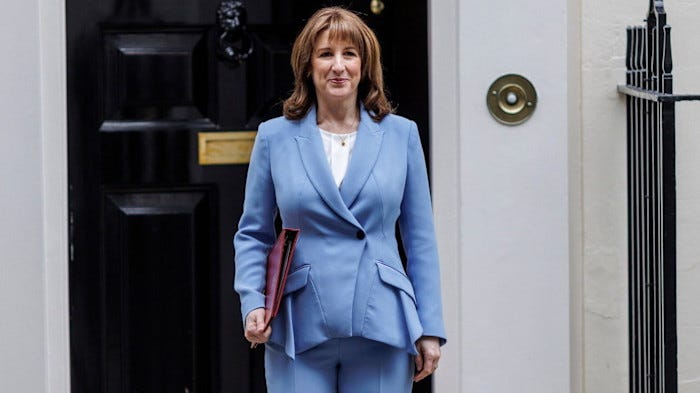
💷 Iran war: an update on what it means for you + Reeves’s cost of living surprise
The 99 TL;DR: Last Tuesday’s Spring Statement is already out of date. The Iran war has made the numbers look uncertain. War = high oil prices which means higher costs for you and me. With oil swinging between $90 and $120 and interest rate cuts out the window, here’s what it all means for you.
Let’s go back 7 days…
The Spring Statement (Tuesday 3 March)
Rachel Reeves delivered her Spring Statement last Tuesday. Alongside it, the Office for Budget Responsibility (OBR), the independent body that checks the government’s sums, published its forecasts for the year ahead:
Growth downgraded from 1.4% to 1.1%
Unemployment at 5.2%, highest since late 2020
Youth unemployment at around 16%
Borrowing down, one of the brighter spots in the forecast
Households projected to be around £1,000 a year better off by the end of parliament
But those forecasts were published before the latest Iran-driven oil shock. By Monday, oil had surged above $100 a barrel and briefly moved towards $120 making the £1000 promise appear questionable.
Reeves’s response in the Commons (Monday 9 March)
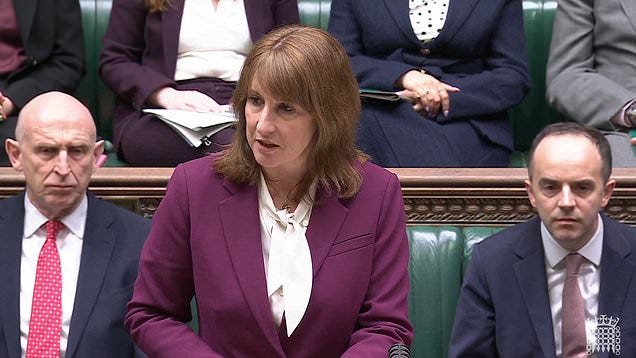
With the outlook looking shakier, Reeves was back in the Commons on Monday (yesterday) to give an economic update on the Middle East conflict. The message was not a new £1,000 cost of living promise. Instead, she said the conflict was likely to put upward pressure on inflation, said the government would keep monitoring the situation closely, and warned petrol retailers against price gouging.
She pointed to support the government had already announced, including:
action taken at the Spring Statement to reduce energy bills
prescription charges frozen
train fares frozen
the new Fuel Finder scheme to compare petrol prices
The oil problem
The April energy cap is based on prices from before Iran. Higher oil won’t hit bills until the July cap at the earliest. The Strait of Hormuz, the narrow waterway between Iran and Oman where 20% of the world’s oil passes through, is where everyone is looking.
Trump’s mixed messages
Meanwhile Trump has been giving very mixed signals about how long this might all go on for. Oil nearly hit $120. Then Trump called the war “short-lived”, floated sanctions waivers, and sent the Navy to escort tankers through the Strait of Hormuz. Prices dropped below $90 today (Tuesday 10th).
If oil prices stay low, Reeves’s numbers might be achievable. If they spike again, they probably aren’t.

What about interest rates?
The next MPC (Monetary Policy Committee) meeting is 19 March when the UK base rate is decided.
There will almost certainly be no change. Markets put the chance of a hold at 3.75% at 99%.
Before the war: multiple cuts expected this year
Now: only one cut priced in for all of 2026
February MPC vote: 5-4 to hold
What it means for you
Last week’s newsletter is still relevant so give it a read if you haven’t already.
📖 Iran war: a calm guide to what it means for you
Energy bills: The price cap falls in April, so your bills should drop. But if oil stays high, the July cap could reverse that. Don’t assume April’s saving is here forever.
Mortgages: If you’re waiting to remortgage or take out a new mortgage, the rate cuts that were supposed to make things cheaper this year probably aren’t coming. Best-buy fixed rates had been creeping down. That’s slowed. If you see a rate you can afford, don’t hang about.
Savings: Higher rates for longer is actually good news if you’ve got cash in a savings account.
Petrol and food: If oil stays above $100, expect petrol prices to keep going up. That feeds into food and transport costs too. The £1,000 better off promise depends on oil coming back down.
The big picture: A lot of what happens next is out of the Chancellor’s hands. It depends on how long the war lasts, what Trump does, and whether oil prices settle.
Sources:
Reuters, Oil sinks 7% as Trump predicts Middle East de-escalation
Reuters, Reeves says UK fiscal headroom has increased since November
Reuters, Most Britons’ energy bills to fall after regulator cuts cap
Bloomberg, Bank of England hit by 5% inflation risk from war in Iran

Prediction Markets Explained: People are making money betting on war. Should they be?
The 99 TL;DR: You’ve probably heard something about ‘prediction markets’ where people are betting on things like regime change in Iran, oil price targets, and (until it was taken down) whether a nuclear weapon would be detonated. It’s all a bit Black Mirror and since the Iran war began, more than $1 billion has been bet on these platforms. One trader made $553,000 from a single bet about the war. They also allow people to bet on stuff like sports, weather and finance. Here we explain what these platforms are, whether you can actually use them, and if we have a problem…
What is a prediction market?
A platform where you buy contracts tied to the outcome of real events
Each contract pays out $1 if the event happens, $0 if it doesn’t
The price reflects probability. A contract at $0.70 = the market thinks there’s a 70% chance
Buy at $0.70, event happens, you pocket $0.30 profit
The two biggest platforms are Polymarket (crypto-based) and Kalshi (US-regulated exchange)
What have people been betting on?
A single contract on the timing of Iran strikes: over $529 million traded
Whether Iran’s government would fall
Whether the Strait of Hormuz would be blockaded
Whether oil would hit specific price targets
and, it gets darker…
Whether a nuclear weapon would be detonated (since removed after public backlash)
Substack have even integrated prediction markets into their platform.
Here are a few examples:
How did someone make $553,000?
A trader called “Magamyman” bet on the death of Iran’s Supreme Leader shortly before the Israeli strike that killed him. Six new accounts made a combined $1 million by correctly betting on the timing of strikes. This has raised serious questions about insider trading on these platforms. Lucky timing or someone on the inside?
Can I use these in the UK?
Not very easily. The FCA’s ban on binary options means Polymarket and Kalshi don’t officially operate here. UK residents who access them risk account termination and have zero regulatory protection. However, Matchbook launched a UK-licensed prediction market product in January 2026, and Smarkets (regulated by the Gambling Commission) offers event betting on politics and news. So it’s starting to happen, just through the gambling door rather than the financial services door.
Is this just gambling, or can you actually make money?
Both. Like any market, some people do very well and most don’t. The difference is that prediction markets aren’t based on company earnings or economic data. They’re based on whether you can correctly guess what’s happening with geopolitical situations, elections, or policy decisions better than the rest. Some traders treat them like any other financial instrument. Others see them as a more informed version of gambling. There is also a big ethical question: is it acceptable to profit from correctly predicting acts of war and the deaths of political leaders?
In the US, Senators Merkley and Klobuchar have introduced the End Prediction Market Corruption Act, which would ban the president, members of Congress, and their families from trading on these platforms. The UK government hasn’t commented specifically, but the FCA’s existing binary options ban already limits access.
Sources:
CNBC, Prediction markets face questions on Iran war bets
NPR, Prediction market trader ‘Magamyman’ made $553,000
Reuters, US Democrats working on bill to rein in prediction markets
Good Money Guide, Can you trade prediction markets in the UK?
Ask a question
If you have a question or topic suggestion, leave it below and we’ll make sure to cover it next week 💛
Share today’s newsletter
If you enjoyed this week’s round-up, please share it by clicking this button:
Subscribe
If you aren’t already, make sure you’re subscribed so that you are first to receive the 99 in your inbox every Monday.
Feedback and ideas
